Best Bow Stabilizers

Updated: Jul 25
Stabilizers are a misunderstood part of a bow setup that many bow hunters look right past.
They find the shortest thing possible, slap it on there & away they go
That’s great for maneuverability, but it leaves a lot of room for improvement…
Not just for accuracy but also for how quickly you get your pins to settle when that big buck finally gives you a short shooting window
So, this post will help you cut through the noise and learn how stabilizers work, what to look for when picking a stabilizer, and what the best stabilizers are for your situation.
When you buy through links on our site, we may earn an affiliate commission at no additional cost to you. Learn more.
How Do Bow Stabilizers Work?
Bow stabilizers are a great tool to get the most accuracy out of your bow.
But what do they do and how do they actually work??
The main goal of a bow stabilizer is to…
Well…
Stabilize the bow.
That means helping you keep your pin on target at full draw.
The simplest way they do this is by changing the bow balance and lowering the center of gravity of the bow.
For the most part, this is done with front stabilizers that help to stop your bow moving up and down.
The longer or heavier the stabilizer is, the more stable it makes the bow.
Another type of stabilizer that’s become popular, especially for tournament archers, is a side stabilizer.
Yup, it’s exactly what it sounds like.
A stabilizer that’s offset and comes off to the side of the bow.
These help to minimize left to right movement.
In tournament archery, they usually use 2 side bars, one on each side, leading to the name V-bar stabilizers.
For bowhunters that use side bars, they will only use 1 on the opposite side of their quiver and sight to help offset the rotational torque they create.
Help pins settle fast and reduce pin float

What to Consider When Choosing a Bow Stabilizer
There’s a few different factors you need to keep in mind when you’re looking at getting a stabilizer for your bow…
And all of them ultimately affect your performance.
Stabilizer Length
This is the first big factor you need to keep in mind when you’re picking a new stabilizer.
Stabilizers can come in all different sizes for different purposes, but all of them have their place.
If you’re looking at a stabilizer for tournament archery, you’ll likely want a stabilizer that’s over 15” long.
On the other hand…
If you’re a bowhunter from the midwest that usually hunts out of a blind or a tree stand, a 6” stabilizer might be a better fit for you.
Stabilizer Weight
Weight is the next most important factor after stabilizer length.
It’s the other half of the equation when it comes to stability…
Essentially, a shorter stabilizer that’s heavier, will stabilize similarly to a longer stabilizer with less weight.
So going back to the last example, if you’re a tournament archer, you may only want 1 oz or 2 oz of weight at the end of your stabilizers because you have a front stabilizer and 2 side stabilizers.
Whereas in the bowhunting example, if you’re only running 1 stabilizer that’s on the shorter side, you may want to use more weight to beef up your stability.
Dampening
This is really only a factor for bowhunters, especially that are using a stabilizer under 8”.
Some stabilizers will have extra dampening built in.
What this does is not only help minimize vibration in hand to increase accuracy…
But it also makes the bow quieter, which can be a huge advantage in this fall.
Intended use
I mentioned this with basically every other factor, but it’s worth repeating.
Every single other factor needs to be evaluated through the lens of what you plan on doing with your bow.
The best stabilizer for target archery is terrible for bowhunting.
On top of that, even within bowhunting, the type of stabilizer you use will vary with your hunting style!
Someone who only hunts whitetails in the midwest and never has a shot opportunity over 35 yards doesn’t need to dial in their stabilizer set up as much as…
A western bowhunter that regularly shoots elk from 45 to 55 yards.
That western bowhunter will probably want a front stabilizer in the 8” to 10” range with a 6” to 8” side bar to completely minimize pin float.
Best Bow Stabilizer For Hunting
CBE Torx Carbon Micro

Available in 8”, 10” and 15”
Best Bow Stabilizer For The Money
Bee Stinger Sport Hunter Xtreme
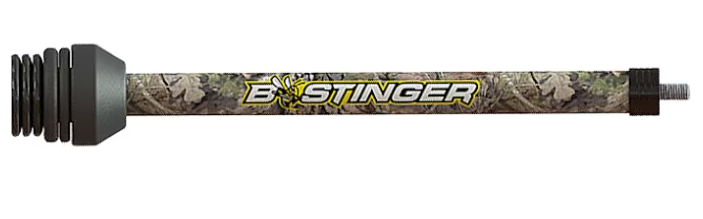
The Bee Stinger Sport Hunter Xtreme is a great budget stabilizer for the majority of archers.
It comes in 6” or 8” models, so it’s extremely maneuverable, for archers hunting out tree stands or saddles.
There’s also a fair amount of adjustability for a stabilizer in this price range…
The weight is made up of 3 individual 1 oz weights so you can tweak your set up to get the most out of your bow.
To make it even better, the Sport Hunter Xtreme also has internal and external dampeners to minimize noise and vibration.
Now if you’re sitting there thinking to yourself…
“That’s great and all, but I want to run a back bar too…”
Good news!
You can also grab the Sport Hunter Xtreme Kit, to get a 8” Stabilizer, a 6” back bar and Bracket to mount your back bar.
Best Bow Stabilizer For Vibration
Trophy Ridge Hitman Bow Stabilizer
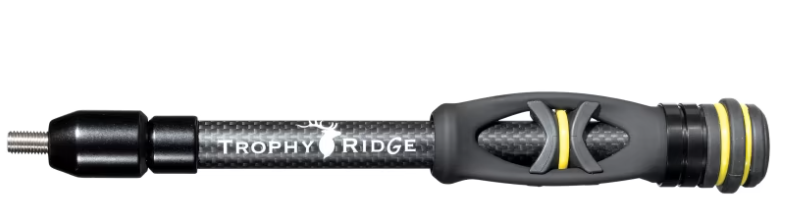
The Trophy Ridge Hitman is really only going to be a great fit for whitetail hunters who only hunt out of a stand.
The reason I say that is it does a great job of keeping your bow quiet, but it doesn’t do as much as far as true stabilizing
It’s too short to give you the real benefits of a stabilizer, but it does have plenty of rubber throughout to cut down on vibration.
Now cutting down vibration is still important for hunters who chase whitetail from the ground or elk out west, but the length of this stabilizer doesn’t give enough stability for those longer shots.
Best Bow Stabilizer For Elk Hunting
Bee Stinger Microhex Counter Slide

This stabilizer is very unique in its set up
It’s going to be the middle ground between a standard stabilizer and a stabilizer back bar combo.
The counter slide is one long bar with adjustable weights on both ends
But it has a bracket that lets you slide the bar back & forth to adjust how much of the weight & stabilizer is out front and how much is in the back.
If you’ve been interested in running a back bar set up, but aren’t 100% sold on the idea, this is a good middle ground to start with because you can adjust how much weight is in the back…
Or even use it with all of the weight & stabilizer in the front and basically no back bar at all if that’s what feels right for you.
Overall this is the most adjustable option and is a great fit for someone wanting to just test the waters of a back bar system
Best Bow Stabilizer Combo Kit
Antler Ridge Hunting 10'' and 8'' Bow Stabilizer Combo

Best Bow Stabilizer For Sound Dampening
LimbSaver LS Hunter
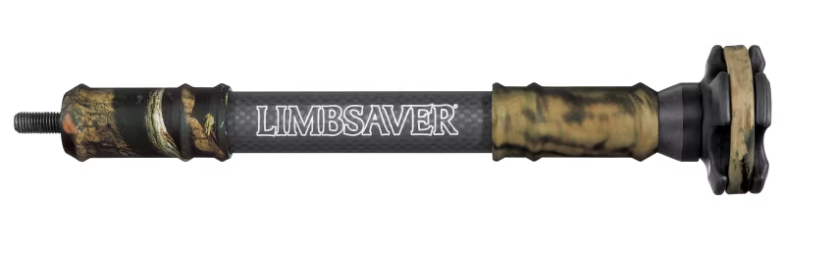
This is going to be a sweet spot if you’re REALLY focused on cutting down noise & vibration in your bow, but still want a stabilizer that’s long enough to… you know… stabilize
Coming in at 9.5” this stabilizer will give you a lot of stability out front without being too difficult to maneuver
But LimbSaver went all out to give you extra sound dampening, most of this stabilizer is covered in rubber which helps keep deer from jumping the string when you shoot.
Best Bow Stabilizer Quick Disconnect
Bee Stinger Quick Disconnect
Bow stabilizers can make transporting your bow a bit of a pain, especially once you start getting stabilizers over 10”...
So instead of having to completely take apart your stabilizer set up (and risk putting it back on on the wrong settings) you can use a quick disconnect.
These keep your settings all the same, but allow you to easily take your stabilizers off your bow for travel or storage.
The best bow stabilizer quick disconnect for most archers is the Bee Stinger Quick Disconnect.
It’s easy to set up and completely take the headache out of traveling with your bow.
Frequently Asked Questions (FAQs)
What length of stabilizer for bowhunting?
6” to 10”
Bowhunters who mainly hunt out of blinds or treestands are going to want to be on the lower end of that range to maximize maneuverability.
Western bowhunters that are shooting 40+ yards regularly are going to want to be on the higher end of that range.
What are back bar/side bar stabilizers?
Back bars/side bars are stabilizers that are additional stabilizers that are mounted at an angle off the side of a bow.
They help to minimize left to right pin float and can offset the weight of a sight and quiver on a bow.


Comments